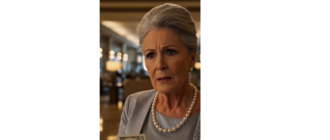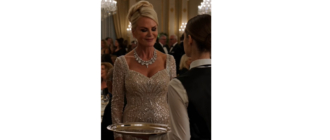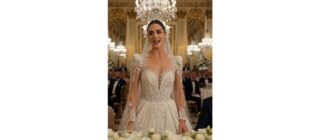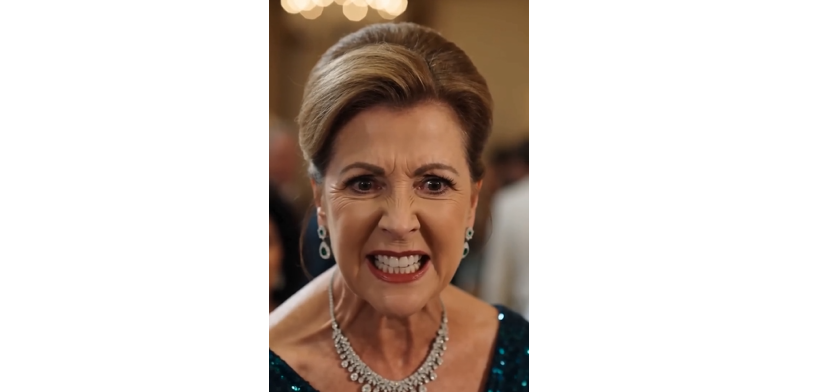
The ballroom of the Grand Wellington Hotel looked like something from a fairy tale.
Crystal chandeliers hung above hundreds of guests. White roses covered the tables, and tall windows reflected the warm lights across the polished floor.
At the center of the room stood the bride, Emily Carter.
She wore a simple but elegant ivory wedding dress. Unlike the expensive gowns chosen by many wealthy brides, hers had been made by a small local designer and paid for with money Emily had saved herself.
She loved it.
Her fiancé, Daniel Whitmore, loved it too.
But Daniel’s mother did not.
Margaret Whitmore had never hidden her belief that Emily was not suitable for her son. The Whitmores were an old and respected family, while Emily had grown up in foster care and worked as a school counselor.
Margaret believed Daniel should have married someone with a famous surname, wealthy parents, and powerful connections.
Throughout the wedding preparations, she had criticized everything Emily chose.
The flowers were too simple.
The invitations were too modest.
The guest list was not prestigious enough.
Emily had tolerated every remark because she loved Daniel and did not want to create conflict between him and his mother.
But on the wedding day, Margaret went too far.
Just before the ceremony began, she stepped into the center of the ballroom and looked directly at Emily’s dress.
Her expression hardened.
“Look at this shameful dress,” she shouted. “This girl is not worthy of our family.”
The guests stopped speaking.
Emily’s face turned red.
Daniel immediately moved toward his mother.
“That is enough.”
Margaret ignored him.
She pointed harshly toward the thin strap resting on Emily’s shoulder.
“You could not even choose something respectable for your own wedding.”
As she gestured, her hand accidentally brushed the fabric.
The strap slipped down slightly.
Emily instinctively reached to pull it back into place, but not before everyone nearby saw the old scar on her shoulder.
It was small but unmistakable.
A pale mark shaped almost like an arrow.
Daniel quickly removed his jacket and placed it around Emily.
Then he turned toward his mother with anger in his eyes.
“How could you do that to her?”
Margaret did not answer.
She was staring at the scar.
All the color disappeared from her face.
Her lips parted, but no words came out.
Then tears slowly filled her eyes.
“That scar…” she whispered. “That cannot be.”
The entire wedding hall fell silent.
Emily looked at her in confusion.
Margaret took one uncertain step forward.
Her voice trembled as she whispered a name.
“Rebecca?”
Emily had never heard it before.
“What did you call me?” she asked.
Margaret lifted one hand to her mouth.
Daniel looked from his mother to his bride.
“Mom, who is Rebecca?”
Margaret could barely breathe.
She asked Emily where she had gotten the scar.
Emily hesitated before answering.
“I have had it for as long as I can remember. My foster records say I was injured before I was brought to the hospital as a child.”
Margaret’s knees seemed to weaken.
A chair was brought for her, but she refused to sit.
Instead, she slowly approached Emily.
“May I see it again?”
Emily remained guarded, but she moved the jacket slightly.
Margaret stared at the mark and began to cry.
Twenty-four years earlier, Margaret had a daughter named Rebecca.
She had been born before Daniel, during Margaret’s first marriage. When Rebecca was three years old, the family was involved in a terrible highway accident during a winter storm.
Margaret was injured and lost consciousness.
When she woke in the hospital, she was told that her husband had died and that Rebecca had not been found.
The child’s car seat had been discovered empty near the damaged vehicle.
Search teams looked for days.
No body was ever recovered.
Margaret had spent years believing someone might have rescued the little girl, but every lead eventually disappeared.
The arrow-shaped scar had come from an accident in the kitchen several months before the crash. Rebecca had fallen against the sharp edge of a broken wooden decoration.
Margaret had cleaned the wound herself.
She remembered its exact shape.
Emily listened without moving.
“That is impossible,” she said quietly. “My name is Emily.”
Margaret shook her head.
“You were called Rebecca Anne.”
Daniel stared at his mother.
“You are saying Emily could be my sister?”
The question sent shock through the room.
Margaret immediately corrected him.
“My daughter was from my first marriage. You and Rebecca do not share the same father.”
Daniel looked relieved, but Emily still seemed overwhelmed.
She did not want to believe a single scar could prove something so extraordinary.
The ceremony was postponed.
Later that afternoon, Margaret brought an old family album from her home.
Inside were photographs of a small girl with dark eyes and a familiar smile.
Emily stared at them for a long time.
In one image, the child wore a silver bracelet decorated with a tiny blue bird.
Emily suddenly stood.
She walked to the private room where her belongings had been placed and returned with a small wooden box.
Inside was the only object that had been found with her when she entered foster care.
A damaged silver bracelet.
A blue bird still hung from its chain.
Margaret began sobbing.
Still, Emily demanded proof.
A DNA test was arranged the following morning.
The results confirmed that Margaret was Emily’s biological mother.
Further investigation revealed what had happened after the accident.
A truck driver had found the injured child walking near a service road several miles away. Because of the storm, the driver could not reach the nearest hospital and took her to a small rural clinic.
The girl had a head injury and could not clearly say her name.
Before authorities connected her to the crash, the clinic closed during an emergency evacuation caused by flooding. Several records were lost or entered incorrectly.
The child was eventually transferred into foster care under the temporary name Emily.
A misspelled date and incomplete paperwork prevented investigators from matching her to the missing child.
Margaret had spent twenty-four years grieving a daughter who had been alive the entire time.
When the truth became public, reporters described it as a miracle.
But for Emily, the discovery was complicated.
She was relieved to understand where she came from, yet deeply hurt by the way Margaret had treated her before knowing her identity.
During their first private conversation, Margaret reached for her hand.
Emily pulled it away.
“You believed I was unworthy of your family when you thought I was a stranger,” she said. “Finding out that I am your daughter does not erase that.”
Margaret lowered her head.
She admitted that grief had hardened her over the years. After losing Rebecca, she had tried to control every detail of Daniel’s life because she was terrified of losing another child.
But fear had slowly turned into pride and cruelty.
“I cannot ask you to call me your mother,” Margaret said. “I have not earned that.”
Emily appreciated her honesty.
The wedding took place three months later.
This time, the ceremony was smaller.
Emily wore the same dress.
She did not hide the scar on her shoulder.
Margaret sat quietly in the front row. She made no speeches and demanded no special place in the celebration.
After the ceremony, she approached Emily and handed her the repaired silver bracelet.
“I kept the matching charm all these years,” she said.
Emily opened the box.
Beside the blue bird was a second one that Margaret had worn on a chain since the accident.
Emily accepted the bracelet, but their relationship developed slowly.
Margaret attended counseling and began volunteering with organizations that helped children whose identities had been lost through incomplete foster records.
She also apologized publicly to Emily for humiliating her.
Years later, Emily would say that the scar did not instantly reunite a family.
It merely opened a door.
What repaired their relationship was not blood, wealth, or an old photograph.
It was Margaret’s willingness to confront the person she had become—and Emily’s decision to allow forgiveness without pretending the pain had never happened.