The Beaumont Estate looked magnificent beneath the evening lights.
Hundreds of white roses decorated the grand hall, crystal chandeliers reflected across the polished marble floor, and elegantly dressed guests filled every table.
It was the kind of wedding people talked about for years.
At the center of it all stood the bride, Olivia Bennett, and the groom, Daniel Rossi.
Daniel came from a modest family. He had worked hard to build a successful career in architecture, but his mother, Maria, had spent most of her life working as a cleaner.
She had raised Daniel alone after his father died when he was still a child.
Maria had worked in offices, hospitals, and hotels, often taking night shifts so Daniel could stay in school.
She never complained.
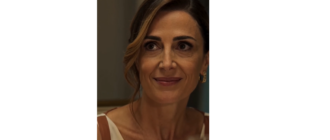
She wore a simple blue dress to the wedding and sat quietly at the front table, proud of the man her son had become.
Olivia’s parents, however, had never truly accepted her.
Her mother, Victoria Bennett, came from a wealthy family and believed social status revealed a person’s value.
Throughout the wedding preparations, she had repeatedly made comments about Maria’s clothes, her accent, and her lack of formal education.
Daniel usually tried to ignore them.
He wanted peace between the two families.
But during the reception, Victoria decided to make her opinion public.
She stood near the stage holding a glass of champagne and looked directly at Maria.
“She doesn’t even have an education,” she said mockingly. “She worked as a cleaner her whole life.”
A few guests laughed.
Others looked down in discomfort.
Daniel lowered his eyes.
Not because he was ashamed of his mother, but because he was ashamed that he had allowed the insults to continue for so long.
Maria looked at her son.
She saw the pain on his face.
Then she calmly rose from her chair.
Without showing anger, she walked toward the stage and took the microphone.
The scattered laughter faded.
“That’s true,” Maria said. “I never finished university.”
Victoria smiled triumphantly.
Maria continued.
“But there is one person in this room who knows very well who I really am.”
At that moment, the large doors at the back of the hall opened.
An older man entered carrying a black leather folder.
Several guests immediately recognized him.
He was Jonathan Beaumont, chairman of the company that owned the estate and several luxury hotels across the country.
Jonathan walked slowly through the silent hall.
He stopped beside Maria and looked toward the guests.
“Mrs. Maria,” he said respectfully, “it is time for everyone to know who really owns this entire wedding estate.”
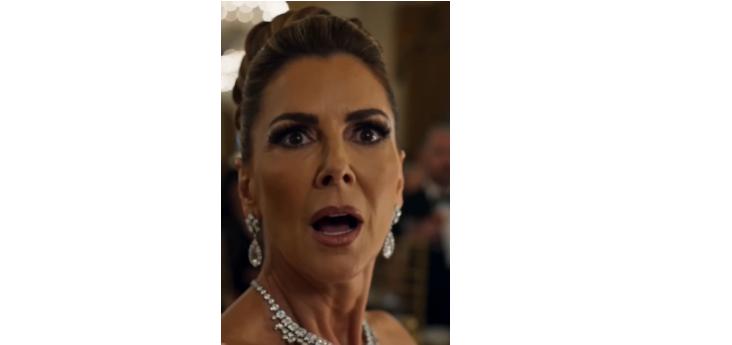
Victoria’s smile disappeared.
Her husband, Charles, slowly placed his glass on the table.
Maria remained silent as Jonathan opened the folder.
Inside were legal documents, property records, and a handwritten letter.
Years earlier, before the estate became famous, Maria had worked there as part of the cleaning staff.
At the time, the property had been neglected and was close to bankruptcy.
The previous owner, Jonathan’s father, Arthur Beaumont, was elderly and seriously ill.
Most employees saw only a struggling business.
Maria saw a lonely man trying to save the place his family had built.
She often stayed after her shift to help him organize old records and correspondence.
Although she had never completed university, Maria had an extraordinary understanding of numbers and contracts.
She had learned accounting from her late husband, who had worked as a bookkeeper before his death.
One evening, while sorting through unpaid invoices, Maria noticed that several company accounts were being drained through false maintenance contracts.
She quietly showed the documents to Arthur.
The discovery saved the estate from financial collapse.
But Maria did more than expose the fraud.
She used the small inheritance left by her husband to help cover emergency salaries for employees who had not been paid in months.
She asked for nothing in return.
Arthur Beaumont never forgot it.
Before his death, he transferred a controlling portion of the estate into a private trust under Maria’s name.
The agreement allowed Jonathan to manage the property publicly, while Maria remained the principal owner.
Maria had chosen to keep the arrangement private.
She did not want wealth to define her or influence Daniel’s childhood.
She continued working because she believed honest work carried dignity, regardless of title.
Jonathan lifted the first document.
“This estate belongs primarily to Mrs. Maria Rossi,” he announced. “My family has managed it on her behalf for twenty-two years.”
A wave of whispers moved through the hall.
Victoria stared at Maria in disbelief.
“That cannot be true.”
Jonathan handed the papers to the wedding planner, who verified the legal seals.
“It is completely true.”
Charles Bennett turned toward his wife.
“You mocked the owner of the estate hosting our daughter’s wedding.”
Victoria’s face turned pale.
Maria raised the microphone again.
“I did not come here to embarrass anyone.”
Her voice remained calm.
“I came to watch my son marry the woman he loves.”
She looked toward Daniel.
“But I also came hoping both families would begin with respect.”
Daniel stepped onto the stage.
Tears filled his eyes.
“I should have defended you sooner.”
Maria touched his cheek.
“You were trying to keep peace.”
Daniel shook his head.
“Peace that depends on someone staying silent is not real peace.”
The room became still again.
Olivia walked toward Maria.
She had heard her mother’s comments throughout the engagement but had never understood how deeply they affected Daniel and his mother.
“I am sorry,” she said. “I should have stopped this too.”
Maria looked at her gently.
“You are not responsible for every word your mother says. But you are responsible for the kind of family you help create from this day forward.”
Olivia nodded.
Victoria approached slowly.
For the first time that evening, she looked uncertain.
“I did not know who you were.”
Maria answered quietly.
“That is exactly the problem.”
Victoria lowered her eyes.
“You believed I deserved respect only after learning I owned the estate.”
The words were not spoken harshly, but they struck the room harder than anger could have.
Maria continued.
“A cleaner deserves respect. A server deserves respect. A driver deserves respect. Ownership should not be the reason anyone is treated with dignity.”
No one laughed now.
The wedding continued, but its meaning had changed.
Daniel and Olivia exchanged vows in front of both families.
During the reception, Maria asked Jonathan not to remove Victoria or Charles from the estate.
She wanted the evening to remain focused on the newly married couple, not on humiliation.
In the weeks that followed, Victoria wrote Maria a long letter.
She admitted that she had spent her life judging people by education, money, and social connections.
She did not ask to be forgiven immediately.
She simply acknowledged that Maria had shown more grace in one evening than Victoria had shown throughout the entire engagement.
Maria accepted the apology cautiously.
Their relationship did not become warm overnight.
But it became honest.
Several months later, Maria announced that a portion of the estate’s annual profits would fund scholarships for adult workers who had never had the chance to complete their education.
The program also offered career training to hotel cleaners, kitchen staff, servers, and maintenance workers.
At the opening ceremony, Daniel stood beside her.
A reporter asked why she had continued working as a cleaner after becoming the estate’s owner.
Maria smiled.
“Because there is no shame in honest work,” she said. “The shame begins when we believe another person’s job makes them less worthy than us.”
The black folder was later placed in a glass case inside the estate’s main office.
Beneath it was a small plaque.
It did not mention Maria’s wealth.
It simply read:
Character is revealed not by how we treat the powerful, but by how we treat those we believe have no power at all.