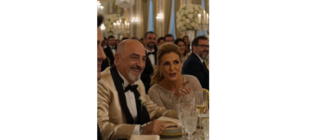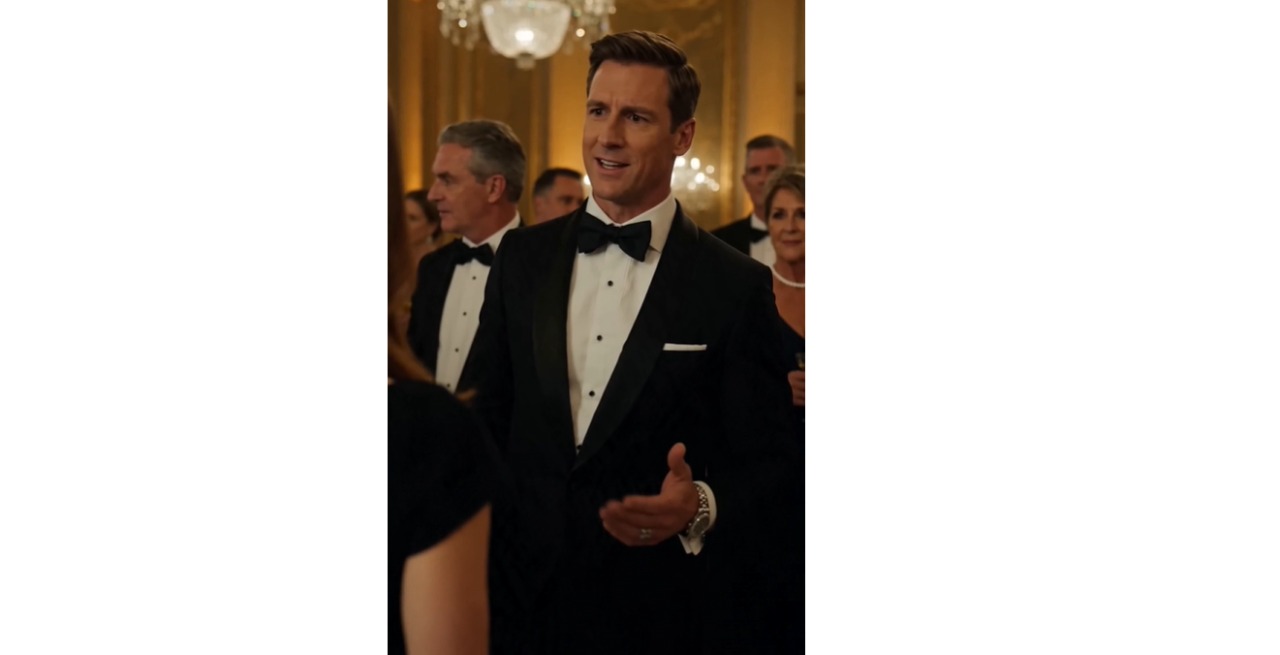
The grand ballroom was filled with business leaders, investors and elegantly dressed guests.
At the center of the evening stood Charles Whitmore, a wealthy businessman who enjoyed making sure everyone knew his status.
Near one of the tables, he noticed a woman in a simple black dress helping a young child find his parents.
Her name was Sarah Bennett.
Charles assumed she was part of the household staff.
When Sarah politely asked him to move aside so the child could pass, Charles looked at her coldly.
“You’re only the nanny here.”
Several guests turned toward them.
Sarah remained calm.
She did not argue.
She simply turned away and walked toward the stage.
Charles smiled confidently, believing she was leaving in embarrassment.
Instead, Sarah climbed the steps.
She took the microphone.
The ballroom slowly became silent.
“My name is Sarah Bennett.”
Whispers immediately spread through the room.
A senior staff member near the stage lowered his head respectfully.
Then the large screen behind Sarah lit up.
The company logo appeared.
Sarah looked across the ballroom.
“I am the owner of the company behind this event.”
Charles froze.
The evening was the annual gala of Bennett Global, one of the fastest-growing companies in the industry.
Sarah had founded the business years earlier and deliberately avoided becoming a public celebrity.
She preferred to let her team and the company’s work receive attention.
Charles had recently been trying to secure a major partnership with Bennett Global.
He had spent the entire evening attempting to impress executives he believed had the power to approve the deal.
He never imagined that the quiet woman he had insulted was the person who would make the final decision.
Sarah continued her speech.
“Tonight was organized to recognize the people whose work often goes unnoticed.”
She looked toward the staff.
“The assistants. The drivers. The cleaners. The caregivers. And yes, the nannies.”
The room remained silent.
“No honest job makes a person less worthy of respect.”
Charles lowered his eyes.
After the speech, he approached Sarah.
“I owe you an apology.”
Sarah looked at him calmly.
“You do.”
Charles hesitated.
“Will this affect our business discussions?”
Sarah answered:
“That depends on whether you understand what happened tonight.”
He looked confused.
“I was wrong about who you were.”
Sarah shook her head.
“That is not the lesson.”
She paused.
“You were wrong about how you treated the person you thought I was.”
Charles had no answer.
The partnership was not immediately approved.
Sarah asked her team to evaluate not only Charles’s company but also its workplace culture and treatment of employees.
Several serious concerns were discovered.
Charles was given the opportunity to make meaningful changes before any future agreement could be considered.
Months later, Sarah attended another company event.
She again wore a simple black dress.
But this time, Charles greeted every member of the staff with the same respect he showed the executives.
Sarah noticed.
She said nothing.
She did not need to.
Because that night in the ballroom had taught everyone something important:
True character is not revealed by how we treat someone after discovering their title.
It is revealed by how we treat them when we believe they have none.